Let's be honest - when you first see the xud3.g5-fo9z Python error, your initial reaction is probably confusion followed by mild panic. It doesn't look like a typical Python error. There's no clean traceback pointing to a missing bracket or an undefined variable. It looks weird, almost random - and that's exactly what makes it frustrating.
But here's the thing: once you understand what's actually going on under the hood, fixing it becomes a lot more straightforward than the error message makes it seem. This guide is going to walk you through everything - what this error is, why it happens, and how to fix xud3.g5-fo9z Python error step by step without wasting hours going down the wrong path.
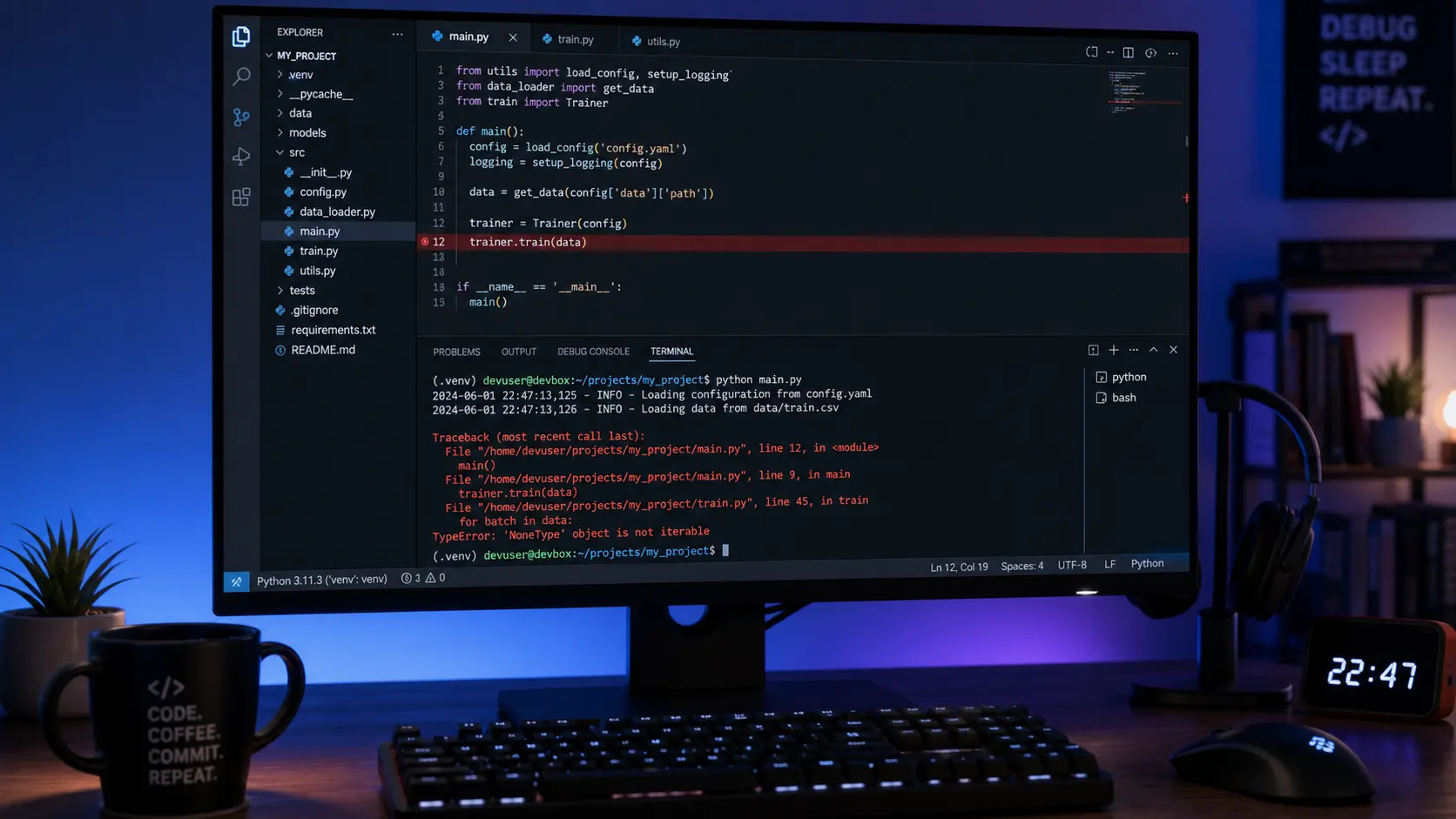
What Is the xud3.g5-fo9z Python Error?
Before you can fix something, you need to understand it - even if just at a surface level.
The xud3.g5-fo9z Python error is not an official Python exception. You won't find it listed in the Python documentation, and no, it's not a bug in Python itself. Think of it more as a broken reference identifier - a label that surfaces when Python fails to properly load a module, file, or dependency in your environment.
In simpler terms, Python is trying to reference something and can't find it. The weird alphanumeric tag (xud3.g5-fo9z) is essentially a garbled pointer - it shows up when something beneath your project has gone wrong, usually in the environment or dependency layer.
The reason it feels confusing is because it doesn't tell you what broke - it just tells you that something did. But the good news is that in the vast majority of cases, this is a configuration problem, not a code problem. Your actual Python scripts are probably fine.
Why Does the xud3.g5-fo9z Error Show Up?
Understanding the root cause is what separates a permanent fix from a temporary patch. Here are the most common reasons this error appears:
Dependency Conflicts Between Libraries
When two or more packages in your project need different versions of the same underlying library, things can get messy fast. Python doesn't always throw a clean conflict error - sometimes it just silently fails and produces something like xud3.g5-fo9z when it tries to load a module and gets confused about which version to use.
This tends to happen more often on projects where packages were installed one by one over time, rather than through a clean, version-locked requirements.txt file.
Corrupted Cache Files
pip, Python's package manager, stores cached files to speed up future installs. That's a great feature - until the cache gets corrupted. When pip tries to pull from a corrupted cache entry, it can create broken file references that surface as mysterious errors during runtime.
This is one of those causes that's easy to overlook because the cache operates silently in the background. Most developers don't think about it until something breaks.
A Broken or Unstable Virtual Environment
If you're using virtual environments (and you should be), they aren't immune to corruption. Switching Python versions, updating your OS, or even moving your project folder can break a virtual environment in ways that aren't immediately obvious.
Incorrect File Paths or Renamed Files
Sometimes the fix is as simple as a file that was renamed, moved, or deleted - and the import statement in your code is still pointing to the old location. Python can't find what it's looking for and logs a confusing error rather than a clean FileNotFoundError.
Outdated Python or pip Versions
Running an older version of Python or pip can create compatibility gaps between your environment and modern packages. This is especially common if you installed Python a while back and haven't updated since.
Common Causes at a Glance
|
Cause
|
What Happens
|
Fix
|
|---|---|---|
|
Corrupted cache
|
Broken temp files interfere with module loading
|
Clear pip cache
|
|
Broken virtual environment
|
Environment state is unstable
|
Recreate the environment
|
|
Dependency conflict
|
Libraries clash with each other
|
Reinstall dependencies
|
|
Wrong file path
|
Python can't find the referenced file
|
Update import paths
|
|
Outdated Python/pip
|
Version incompatibilities
|
Update Python and pip
|
How to Fix xud3.g5-fo9z Python Error - Step by Step
Now let's get into the actual fixes. Work through these in order. Don't skip ahead - each step builds on the last, and the earlier steps are the most likely to resolve your issue quickly.
Step 1: Restart Everything First
This sounds too simple to matter, but it genuinely does work in some cases. Python environments, IDEs like VS Code or PyCharm, and even terminal sessions can get into a bad state. Close everything, reopen your terminal, and try running your script again.
It takes 30 seconds and might save you an hour of debugging.
Step 2: Check Your Python Version
Run the following in your terminal:
bash
python --version
If you're on an older version (anything below Python 3.9 for most modern packages), that could be contributing to the problem. If you need to update, download the latest stable version from python.org and reinstall.
Also worth checking: make sure you're running the version you think you're running. On systems with multiple Python versions installed, python and python3 might point to different things.
Step 3: Upgrade pip
Before doing anything else with packages, upgrade pip itself:
bash
pip install --upgrade pip
Outdated pip versions cause all kinds of quiet failures. This is a low-effort step that's fixed actual errors more times than people expect.
Step 4: Clear the pip Cache
This one is underrated and often skipped. Clear all cached pip files with:
bash
pip cache purge
If corrupted cache files were behind your xud3.g5-fo9z error, this single command can resolve it.
Step 5: Recreate Your Virtual Environment
If the above steps haven't fixed the issue, it's time to start fresh with your virtual environment. This is the most reliable fix for this type of error.
Delete your existing environment and create a new one:
bash
python -m venv newenv
Activate it:
bash
# On Mac/Linux: source newenv/bin/activate # On Windows: newenv\Scripts\activate
Then reinstall your dependencies:
bash
pip install -r requirements.txt
In the majority of cases, this resolves the xud3.g5-fo9z error completely. A clean environment eliminates all the accumulated dependency drift and cached corruption that builds up over time.
Step 6: Reinstall the Specific Problem Package
If you know which package triggered the error (usually whatever you installed or updated right before the error appeared), try reinstalling just that one:
bash
pip uninstall package_name pip install package_name
This forces pip to pull a fresh copy rather than relying on anything cached or partially installed.
Step 7: Run Python in Verbose Mode
If you still can't pinpoint the issue, verbose mode gives you a more detailed look at what Python is doing under the hood when it throws the error:
bash
python -v your_script.py
This will print every import Python attempts, making it much easier to spot where it's failing.
Step 8: Check Your PYTHONPATH and Environment Variables
Incorrectly set PYTHONPATH or other environment variables can cause Python to look for modules in the wrong places. Run:
bash
echo $PYTHONPATH
If it's pointing to a location that no longer exists or has moved, update it accordingly.
Advanced Debugging If the Error Persists
For situations where none of the standard fixes work, go a level deeper:
-
Inspect hidden or suspicious project files - sometimes a corrupted
.pycfile or a misnamed__init__.pyis the culprit. Delete all.pycfiles and the__pycache__folder, then rerun your script -
Check for unverified or third-party packages - if you installed something from outside PyPI, scan the files and make sure no file paths were altered
-
Use a dependency management tool like
pipenvorpoetry- these create more stable, reproducible environments compared to vanilla pip -
Roll back using Git - if you have version control set up, revert to the last commit where everything was working and compare what changed
How to Prevent the xud3.g5-fo9z Error in the Future
Fixing this once is good. Not having to fix it again is better. Here's how to keep your Python environment clean going forward:
-
Use a dedicated virtual environment for every single project - no exceptions. This keeps dependencies isolated and prevents cross-project conflicts
-
Maintain a clean
requirements.txt- only include libraries you actually use, and pin versions where stability matters -
Avoid installing packages globally - global installs are a major source of dependency conflicts
-
Clear your pip cache periodically - especially before starting a new project or after a major package update
-
Keep Python and pip updated - running the latest stable versions reduces compatibility issues significantly
-
Stick to trusted packages from PyPI - avoid installing packages from unverified external sources, which can introduce corrupted or malicious files
Quick Reference Fix Checklist
|
Step
|
Action
|
Command
|
|---|---|---|
|
1
|
Restart terminal and IDE
|
-
|
|
2
|
Check Python version
|
python --version |
|
3
|
Upgrade pip
|
pip install --upgrade pip |
|
4
|
Clear pip cache
|
pip cache purge |
|
5
|
Recreate virtual environment
|
python -m venv newenv |
|
6
|
Reinstall dependencies
|
pip install -r requirements.txt |
|
7
|
Verbose mode debugging
|
python -v your_script.py |
|
8
|
Check PYTHONPATH
|
echo $PYTHONPATH |
Final Thoughts
The xud3.g5-fo9z Python error looks intimidating, especially because it doesn't follow the normal Python error format you're used to seeing. But once you realize it's almost always an environment or dependency issue rather than a problem with your actual code, it becomes far less scary.
The single most effective fix - recreating your virtual environment and reinstalling dependencies - resolves this in the large majority of cases. Add in clearing your pip cache and upgrading pip, and you've covered the most common causes in under five minutes.
Going forward, keeping your environments clean and isolated is the single best habit you can build as a Python developer. It doesn't just prevent this error - it prevents a whole class of cryptic, hard-to-diagnose issues that tend to show up at the worst possible times.